
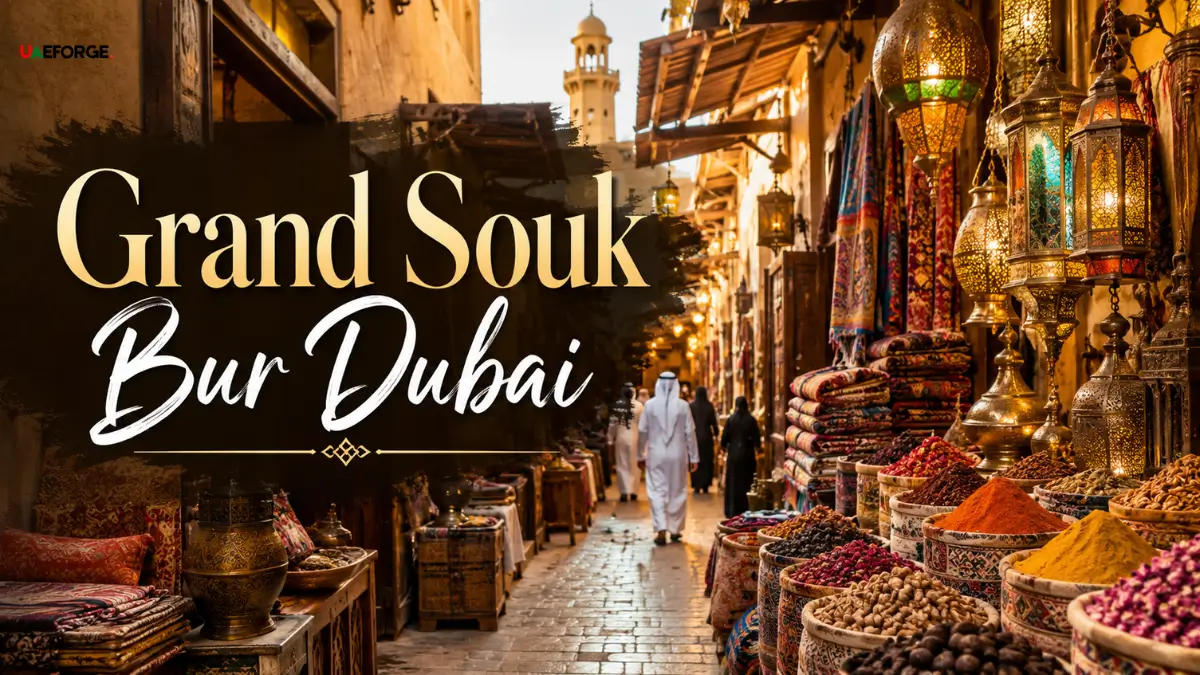
Most visitors’ thoughts of Dubai are of glass towers and luxury malls. However, this is hidden along the historic banks of Dubai Creek, and it is the Grand Souk Bur Dubai, which has been breathing life into this city for centuries. The Bur Dubai Souk, or Old Souk as it is also called, is one of the oldest and most culturally significant open-air markets in the United Arab Emirates.
The Grand Souk, Bur Dubai, is not an air-conditioned megamall, but rather an active page in Emirati history. Its narrow streets, fragrant spice shops, flowing textiles and the music of negotiations in multiple languages make it one of the most authentic sensory experiences in the whole of the Arabian Gulf region.
From the first-time tourist to the expat seeking to discover Dubai’s history, to the experienced traveler seeking cultural experiences, the Grand Souk Bur Dubai is a place that must be visited – and revisited.
Practical Visitor Information
| Detail | Information |
| Location | Bur Dubai, near Dubai Creek and Al Ghubaiba Station |
| Opening Hours | Most shops: 10 AM – 10 PM (some open later); Friday mornings are quieter |
| Entry Fee | Free |
| Best Months to Visit | October – April (cooler weather) |
| Dress Code | Modest clothing recommended; covered shoulders and knees are respectful |
| Currency | UAE Dirham (AED); cash preferred, though many shops now accept cards |
| Language | Arabic is official; English, Hindi, Urdu widely spoken by traders |
| Photography | Generally allowed in the souk; always ask permission before photographing people |
Historical Roots of Grand Souk Bur Dubai
The roots of the Grand Souk Bur Dubai can be traced back to the late 19th century when Dubai was emerging as a major trading hub in the region. The souk was strategically located along Dubai Creek (known locally as the Khor Dubai) and was a natural meeting place for merchants coming from Persia, India, East Africa and the rest of the Arabian Peninsula by dhow boats.
The merchants of Lingah, having left the port for the high taxes, took up residence in Dubai in the early 1900s, at the invitation of Sheikh Maktoum bin Hasher Al Maktoum. When they arrived, the souk became a cosmopolitan bazaar, which combined Arabic, Persian, and South Asian trading traditions in one place. The iconic architecture of the wind-towers (Barajeel) which appear along the perimeter of the souk is a direct result of this Persian influence; it is a natural air-conditioning system that was created long before electricity was introduced to the Gulf.
By the mid 20th century the souq had become the commerce center and shopping hub of Dubai, which it remained until the first modern shopping centres opened in the seventies and eighties. The Grand Souk, Bur Dubai today is a protected heritage site, maintained by the Dubai Municipality, with a lot of care taken to preserve it both as a marketplace and as a living museum of the city’s mercantile soul.
The Way to get to the Grand Souk Bur Dubai is by Car
BurJuman Station (Red Line) is the closest Metro station, and Bur Dubai district is a historic area located about a 10-15 minute walk from BurJuman Station. Or, Al Ghubaiba Bus Station, which is right next to the souk.
One of the most recognizable and recommended means to get to the souk is from the Deira side across Dubai Creek in one of the traditional wooden abras. It’s one of the cheapest (and most memorable) rides in the city — with a charge of just AED 1 per person. The crossing of the 3-minute creek is accompanied by panoramic views of Dubai’s dual skyscrapers and ancient wind towers.
- By Car/Taxi: The souk is easily accessible by taxi or rideshare. There are parking options close by, but it may be crowded during peak hours and weekends at Al Fahidi Historical Neighbourhood.
- Bus: There are several bus services that connect the Al Ghubaiba terminal, located right at the doorstep of the souk.
- The best time to visit is early morning (8 AM–11 AM) and late evening (6 PM–10 PM), particularly during the cooler months (October through April) when the weather is nicer and the evenings are more active.
The Souk’s Key Sections: What to Expect Inside
The Grand Souk Bur Dubai is not one market, but a group of markets, each has its personality and its specialty.
Textile and Fabric Section
It’s perhaps the most showy section of the souk. The textile section, which runs along covered arcades packed with hundreds of shops, is a breathtaking array of bolts of silk, chiffon, brocade, cotton, linen and synthetic fabric in all shades of the rainbow. Indian-inspired saris are displayed next to Emirati thobes and abayas, and tailors are seated at small wooden tables, sewing-to-order.
The most outstanding thing that attracts many people to shop here is the custom tailoring which comes at a cheap price. Whether it’s a wedding ensemble or a traditional Gulf attire, these seamstresses can create a garment in 24 to 48 hours. Quality of fabric can vary from low end to high end, and savvy vendors are usually willing to help customers select the ideal fabric for any use.
Some shopping tips on the Textile section are given below:
- There will be a lot of bargaining involved and it’s part of the process, so always begin by offering 40–50% less than the seller has asked for.
- Test fabric weight, stretch and colorfastness before purchasing
- Request a business card from your tailor so you can arrange to pick up your clothes again.
- Silk georgette, embroidered crepe and mirror-work cotton are popular fabric varieties.
- The Alcoves of the Spice and Grocery
- There are smaller alcoves in between the fabric stores that sell loose spices, dried herbs, nuts and traditional Emirati ingredients. The smell of saffron, cardamom, dried limes (loomi), frankincense and turmeric are an olfactory delight not to be found in a contemporary supermarket.
Many of these spice traders are members of families who have been integral to the souk for generations and they often trade in specialty or rare ingredients, which are not readily available in other parts of the city. Frankincense (luban) is being sold here in different grades: ordinary burning resin, and highly valued Omani frankincense.
Perfume and Oud Shops
Small boutiques are scattered all over the souk that sell traditional Arabian perfumes, attars (alcohol-free essential oil perfumes) and oud (agarwood). These shops are a welcome breath of fresh air when it comes to fragrance as they are free from the synthetic fragrances found in department stores, and the scents are true, layered and blended in the old-fashioned way. You can craft a unique perfume mix, a surprisingly meaningful and affordable luxury, with the help of a talented perfume seller.
Souvenir and Handicraft Zone
The souvenir shop sells a variety of items: hand-painted Arabic calligraphy tiles, camel-leather goods, brass coffee pots (dallah), decorative khanjar daggers, traditional Emirati woodwork inlay jewelry boxes, and intricately embroidered cushion covers, to name a few – for those wanting to take home a piece of Dubai’s heritage. Some are made for the tourist trade, but with a bit of research, a few truly handcrafted items from Oman, India and Iran can be found.
The Al Fahidi Historical Neighbourhood: Right Next Door
A tour of the Grand Souk Bur Dubai is usually accompanied by an excursion to the adjoining Al Fahidi Historical Neighbourhood (previously the Bastakiya Quarter). It’s the oldest existing residential district, with restored coral stone and mud brick houses that now contain art galleries, boutique coffee shops, heritage museums and the Dubai Museum, the city’s main museum of history, which is in the restored Al Fahidi Fort (1787).
The souk and the Al Fahidi neighbourhood are one, and together can be filled with a half day or more of exploring. The suggested trip is to start at the Dubai Museum, before taking a stroll through Al Fahidi’s historical neighbourhood, then make a stopover at the souq to shop, and finally cross the creek to the Deira Gold Souk and Deira Spice Souk for a complete Old Dubai experience.
Around the Souk: Food and Refreshments
The back streets of Bur Dubai’s Grand Souk offer plenty of food options in keeping with the multicultural DNA of the area.
Alleyway cafes hawking karak chai, an unofficial working class drink of Dubai, which is a milky tea spiced with cardamom and costs as little as AED 1-2 per cup. This is a must-stop stop.
- Emirati Restaurants: There are several restaurants here offering traditional Emirati cuisine such as harees, a porridge made of wheat and meat and slow-cooked, and machboos, spiced rice cooked with lamb and chicken, or chicken; also luqaimat, which are fried balls of dough drizzled with date syrup.
- Pakistani, Indian and Sri Lankan Eateries: There are dozens of small eateries in the surrounding streets that serve biryanis, dosas, parottas and freshly baked naan at very reasonable prices due to the presence of a huge South Asian population in Bur Dubai.
- Cafés in Al Fahidi: Within the Al Fahidi neighbourhood, specialty coffee and light Middle Eastern bites are served in courtyard cafes within a few minutes’ stroll from the souk, in an atmospheric setting.
Cultural Tips and Shopping Tips
The mentality for walking through a traditional souq is slightly different from going on a shopping trip in a modern store. Here are some important practices to remember:
- Say “Hello” First and “Look” Second. When she or he enters a shop, a simple “Assalamu Alaikum” or “Marhaba” (hello in Arabic) goes a long way. The gesture is well received by the shopkeepers and frequently brings up a warmer and more honest trading attitude.
- Bargaining is NOT a choice, it is expected: Fixed prices do not occur often in the souk. Usually, vendors ask for a higher price than the floor price. An appropriate counter-offer, a sincere interest in the product and being able to walk away if the price is not right, are all valid components of the negotiation.
- Don’t travel during Rush Hour: The souk is most lively on Thursday and Friday evenings and the Ramadan nights (Laylat Al Qadr nights attract huge crowds to the souk). For a quieter time, try one of the mornings during the week.
- Bring Cash: Cards are becoming widely accepted, but cash can provide more leverage in negotiating, and a lower transaction fee is available at smaller stores.
- Stay Hydrated: A crowded souq is an exhausting experience even in cold weather. Carry water and take breaks at one of the tea stalls or cafés.
The Reason Why the Grand Souk Bur Dubai Remains Relevant
The Grand Souk Bur Dubai is one of the few places to still have a sense of continuity in a time when Dubai evokes images of record-breaking infrastructure, AI-powered hotels, and futuristic urban planning. The creek which once served as a path for Persian dhows carrying dates and pearls in the 1800s still lays at the abra jetties outside the souk. In these lanes the same trading families that sold fabric and spices generations ago still have descendants that operate shops.
The souk is not a reconstruction or a theme park version of an old souk. It’s a space that’s alive and working, a marketplace that’s evolved—organically, slowly—to a city that has been transformed around it.
The souk provides what a luxury mall can’t: a real experience of the human story of Dubai. Each piece of cloth, each pot of saffron, each hand sewn dress sold here is a thread in that story.
FAQ’s
Which of the following is the Grand Souk Bur Dubai known for?
What the Grand Souk Bur Dubai is mostly known for is its long stretch of textile and fabric, where you can find thousands of fabrics as well as custom tailoring services at very competitive rates. It is also a place to buy traditional spices, perfumes, oud and souvenirs from the Emirates.
Is the Grand Souk Bur Dubai free to enter?
Yes, Grand Souk Bur Dubai is all free to enter. If you want to buy anything from the shops inside you will have to pay, however, if you do not want to then you don’t have to.
What is the first time of the day when the Bur Dubai Souk opens?
The majority of the shops in Grand Souk Bur Dubai are open from 10 AM to 10 PM, with some being open later. Friday mornings are quieter (because of Jumah prayers) and many shops have shorter hours on Friday mornings. The souk is mostly active in the evening.
What are the public transport options to reach the Grand Souk Bur Dubai?
The best way to travel are the BurJuman Metro Station (Red Line, c. 10 minute walk), Al Ghubaiba Bus Station (next to the souk), or the famous abra water taxi crossing Dubai Creek.
Is it possible to negotiate in the Grand Souk Bur Dubai?
Yes, at many of the stores in the souk it is common to bargain. A counter-offer that is about 40-50% lower than the amount quoted is a typical starting point, and being friendly and patient is typically the best strategy.
Is the Grand Souk Bur Dubai kid friendly?
Yes, the souk is family friendly. The colours, smells and action of a traditional market can be appealing to children. The abra (ferry) crossing is especially popular with younger visitors, who can cross the Dubai Creek.
What to wear while shopping in Bur Dubai Souk?
Modest attire is recommended in respect of culture. A covered shoulder and knees are acceptable. The dress code is not enforced on tourists, but it is better to dress modestly so it is more comfortable and respectful.
Do you have ATM machines or money exchange services around the souk?
Yes, there are a number of money exchange offices and ATMs in the immediate vicinity of the souk, on the main road and near the Al Ghubaiba terminal. For buying goods, it is better to have UAE Dirhams in cash.
9. What are the differences between the Grand Souk Bur Dubai and Deira Gold Souk?
The main business of the Grand Souk Bur Dubai is textiles and fabrics, spices, perfumes and souvenirs; Deira Gold Souk is one of the world’s biggest gold jewellery souks and is situated across Dubai Creek. Many visitors visit both of these on the same day on the Abra crossing.
When is the most suitable time to visit THE GRAND SOUK BUR DUBAI?
Temperatures typically range from 18°C to 30°C between October and April, making it the best time to visit Dubai and do outdoor exploration during the summer months (June – August) temperatures may exceed 40°C. Winter evening visits provide the most colorful time of the year.
Read Another Topic: ACICO Business Park Dubai

Leave a Comment