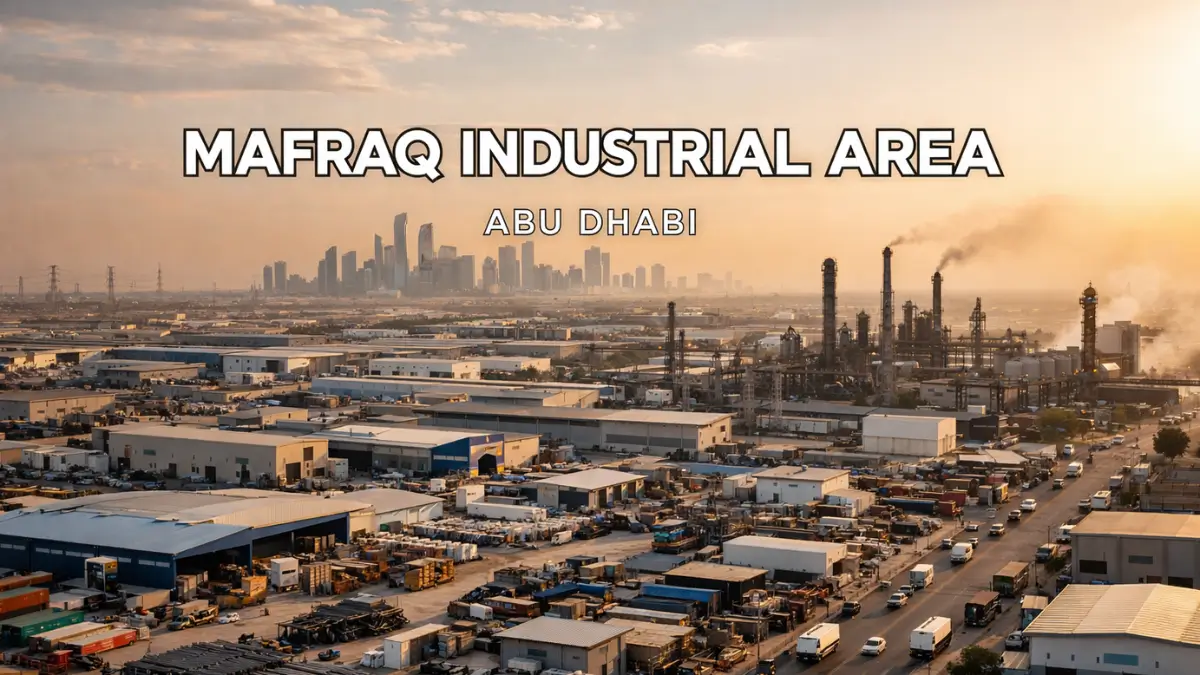
When discussing the economic change of Abu Dhabi, the discussion tends to center on oil incomes, luxury tourism, and gigantic projects such as Louvre Abu Dhabi or Masdar City. However, behind this glitzy exterior, there is an industrial machine that is silently driving the diversification ambitions of the emirate. Mafraq Industrial Area is not an exception, the massive, vibrant, and strategically positioned area that has traditionally been a driving force of non-oil economic activity in Abu Dhabi.
Mafraq Industrial Area is not a complex of warehouses and factories. It is a complete industrial ecosystem, which brings together construction companies, auto firms, logistics companies, food processing firms and manufacturing companies. It is increasingly becoming significant to the overall industrial environment of the UAE, particularly in the light of the Abu Dhabi Economic Vision 2030 and the national Make it in the Emirates campaign.
Be it a business owner interested in establishing business, an investor seeking business opportunities or a researcher who would seek to know more about the industrial geography of Abu Dhabi, this is the ultimate guide offering all the information that you need to know about the Mafraq Industrial Area including its location, history, infrastructure, major industries, business establishment process and outlook.
Location and Connectivity: Strategy and Access
The Mafraq Industrial Area is located on the edges of the Abu Dhabi city, and one of the busiest in the UAE, the Sheikh Maktoum Bin Rashid Road (E11) or the Abu Dhabi-Dubai highway. This is within a perfect logistical location between the capital and Dubai, being situated at the distance of about 35 to 40 kilometres from the city centre of Abu Dhabi.
The most interesting part of the location of Mafraq is its transport and logistics network. The strategic access points are as follows to businesses that operate in the zone:
- Abu Dhabi International Airport – about 25km distant and this allows fast movement of air freights.
- Dubai- Abu Dhabi expressway (E11) – direct highway frontage that facilitates heavy vehicles movement.
- Mussafah Industrial Area of the UAE is the biggest industrial zone in the country, which can be reached in 30 minutes.
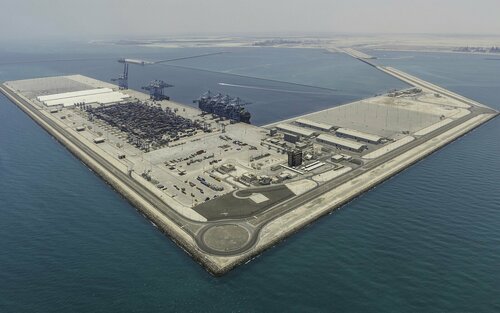
- Khalifa Port and KIZAD (Khalifa Industrial Zone Abu Dhabi) – major deep water port access to import/ export.
- The urban centre in Abu Dhabi – which will allow quick services to commercial and retail centres.
This is a multi-directional connectivity that turns Mafraq into a logistic nerve centre. The manufacturing, distribution and trade companies are immensely benefiting by being able to reach suppliers, customers and shipping routes as easily as possible. The domestic road grid will be made to allow the heavy commercial vehicles and round-the-clock operation becomes possible to businesses that are heavy in terms of logistics.
History
Mafraq Industrial Area has its own experience of transitioning into an international city, having the history of humble ancestry as a small community that was engaged in pearl diving. The zone was put in place during the initial stages of the development of the urban planning in Abu Dhabi when the local governments realised the need to decentralise industry beyond the city centre.
Mafraq has been designed as an industrial sector under the Abu Dhabi City Municipal and Abu Dhabi Department of Economic Development (ADDED) oversight, with a well-defined plan, plot and utility corridors, roads. During its initial years, the area had attracted small manufacturing factories, auto repair shops, and workshops.
The zone radically changed during the subsequent decades. Demand on industrial space has increased, which, combined with the active growth of Abu Dhabi population and the active development of the construction industry, created the need to expand the number of zones and increase the density of the use of the plots. Nowadays, there are hundreds of businesses in Mafraq in various industries, and their infrastructure compares to most of the industrial areas in the region.
Mafraq has a history that has been directly associated with two significant policy structures. The former is the Abu Dhabi Economic Vision 2030, which specifically aims at diversifying the emirate GDP (not hydrocarbons). The latter is the younger Abu Dhabi Industrial Strategy (ADIS), which identifies industrial areas such as Mafraq as the pivotal points within the complex of the advanced manufacturing and supply chain in the UAE.
Layout, Size and Zoning Structure
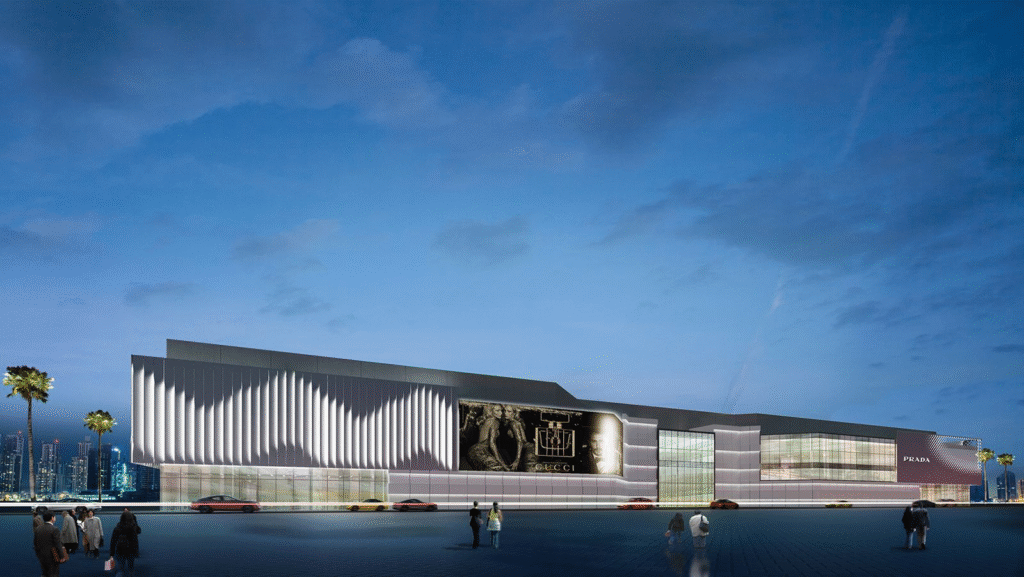
Mafraq Industrial Area is situated on a very large area and the size of the plot would suit very diverse types of businesses – both small artisan workshops and large manufacturing plants. The area is designed to be located in a grid pattern of road network, which provides convenience of movement and circulation of light vehicles and heavy trucks.
Mafraq Zoning Categories
The area is practically subdivided into a number of activity clusters, each of which addresses the needs of a certain industry:
- Heavy Industry Zone – Houses cement block fabrication plants, steel fabrication plants and large size chemical plants that need lots of space and safety margins.
- Light Manufacturing Zone – Here we find smaller production units, carpentry workshops, electrical assembly lines and packaging.
- Warehousing and Logistics Cluster – A set of storage facilities, cold storage, and distribution hubs that support the Abu Dhabi region in general.
- Automotive and Workshop Zone — It is one of the most lively clusters in Mafraq, which has vehicle repair garages, dealers of spare parts and tyres shops as well as auto accessory retailers.
- General Trading and Commercial Showrooms — The enterprises that are involved in the sale of construction materials, industrial equipment and in B2B supply are highly practiced in this sub-zone.
Mafraq has plot sizes of as small as 500 square metres when used in light industries and a size of several thousand square metres when used in heavy industries. This allows both new enterprises and large corporations to access appropriate spaces without being bid into the over-sized plots.
Major Industries and Business Operations
The variety of industries which work in Mafraq Industrial area is one of its characteristic features. Compared to other specialised free zones which specialise in one industry, Mafraq is a mixed-use industrial ecosystem in which various industries co-exist and frequently mutually depend on one another by establishing supply chains.
Dominant Sectors in Mafraq
- Construction Materials Manufacturing – Cement blocks, precast concrete elements, interlocking tiles as well as ready-mix concrete supply is a major portion of Mafraq industrial output, which has a direct connection to the current construction industry of Abu Dhabi.
- Steel and Metal Fabrication – Steel works, aluminium extrusion and custom metal fabrication shops cater to local construction works and export markets.
- Automotive Services and Spare Parts -Mafraq has a self-sufficient automotive economy which includes repair shops, authorised service centres, sellers of used car parts, and car testing centres.
- Food and Beverage Processing – Mafraq is a noiseless, yet significant node in the food supply chain in Abu Dhabi due to cold storage complex, food packaging and refineries, and processed food manufacturing plants.
- Distribution within the UAE – This is where chemical and paint manufacturing is carried out that will be distributed throughout the UAE.
- Electrical and Mechanical Contracting – MEP (Mechanical, Electrical, Plumbing) services companies will base their performance at Mafraq and store materials and teams of skilled specialists throughout the UAE.
- Waste Management and Recycling – Mafraq is slowly turning into a waste processing centre and scrap metal recycling and e-waste processing businesses in line with the sustainability objectives of UAE.
- Logistics, Freight, and Distribution — Mafraq has a variety of logistics firms operating within the emirate that do last-mile delivery due to the proximity to the highway.
The localisation of these industries in a single zone produces a certain synergy in the industry, i.e. in a construction company, an example, the company can obtain steel, concrete, and electrical materials all within a few kilometres, which would save a lot of money in procurement and time spent.
Infrastructure and Utilities
Quality and reliability of its physical infrastructure is considered one of the main reasons why businesses tend to operate in Mafraq Industrial Area. As opposed to informal industrial clusters, which grow naturally without planning, Mafraq was constructed on a good base of proper utility infrastructure making it a reliable base to operate.
- Electricity Supply- Abu Dhabi Distribution Company (ADDC) offers constant, and high-capacity power connections to industry plots, including three-phase electrical supply provisions, which are needed by the heavy machineries.
- Water and Sewerage – Under the Abu Dhabi Water and Electricity Authority (ADWEA) umbrella, which makes sure that there is clean water supply and that waste water is disposed appropriately to facilitate the industrial processes.
- Telecommunications – The zone has high-speed fibre optic connectivity that allows a business to operate ERP systems, CCTV surveillance, cloud services, and digital logistics.
- Internal Roads – The internal roads are wide, well maintained and the flow of the heavy goods vehicles, trailers and forklifts does not have bottlenecks.
- Street Lighting and Security – The area is well-illuminated and patrolled and municipal authorities have made sure that there is a secure operating environment.
- Waste Collection Services – The routine and special hazardous waste procedures are in cooperation with the Environment Agency of Abu Dhabi (EAD).
Continued improvement of infrastructure as part of the master plan of Abu Dhabi to become a smart city is gradually being expanded to industrial zones. Companies that settle in Mafraq now are thus investing in a zone which will only enhance in terms of connection and quality of the services provided to them in the next few years.
Establishing and licensing of a business in Mafraq Industrial Area
The establishment of a business within Mafraq Industrial Area is under the authority of Abu Dhabi Department of Economic Development (ADDED), which is the main regulatory authority of commercial and industrial licensing in Abu Dhabi. The procedure is organized, open, and becoming more online, due to the propensity of the emirate towards smart government services.
Types of Licenses Available
- Industrial License – In case of manufacturing, processing and production.
- Commercial License – Commercial trading, distribution, importing, and exporting.
Professional License: This is applied in the case of business that is service-based like repair workshops, contractors, and consultancies.
Overall Business Startup Guidelines
- Step 1: The initial approval and trade name reservation may be done via the ADDED online portal or physically at the ADDED office.
- Step 2: Choose and apply to be allocated an industrial plot by Abu Dhabi Municipality or authority.
- Step 3: Acquire a building permit with Abu Dhabi City Municipality in case it involves construction.
- Step 4: Fulfill compliance requirements (environmental impact, fire safety, health and safety)
- Step 5: Accept operating license and start business operations.
It should be mentioned that Mafraq is a mainland industrial sector and not a free zone. This implies that businesses are governed by the UAE Federal Commercial Company law including normal ownership provisions. The UAE requires a partner or agent from the nation to conduct business in some structures, but with the recent changes in laws, 100 percent foreign ownership has been increased in some industrial activities.
The plot lease rates in Mafraq depend on the plot size, position on the zone and purposes of the industrial activity. Compared to the Abu Dhabi centrally-located rates, they tend to be competitive, and Mafraq is affordable to businesses that are not as concerned about high-end addresses as the space to run their business.
Human Resource, Labor Relocation, and Skill Supply
Any successful industrial sector needs more than land and infrastructure but a stable and skilled labor force. The location of Mafraq is an advantage because it is close to various worker accommodation centers and labour villages in the larger Abu Dhabi area, thus business establishments do not have to incur the heavy commuting overheads to accommodate their employees.
- Close to labour accommodation camps –A number of complexes of worker housing are within a close distance of Mafraq, and they offer cheap accommodation to industrial employees.
- Transport corridors – There are special workers buses routes and commercial transport networks that connect accommodation areas and Mafraq.
- Availability of trade skills- Welders, fabricators, mechanics, electricians, plumbers and logistics operators are easily available in the local labour market.
- Government and semi-government employers in the immediate vicinity – The availability of ADNOC, ADDC and Abu Dhabi Ports facilities in the surrounding areas provides a healthy supply of skilled talent to the business in the private sector.
Environmental Compliance and Sustainability
With the UAE hastening towards its Net Zero 2050 pledge, industrial hubs such as Mafraq are being heavily monitored by stringent environmental laws that aim to lower carbon emission, clear industrial waste and encourage efficiency in resource use.
Environment Agency Abu Dhabi (EAD) controls environmental compliance within all industrial fields. Mafraq business enterprises are required to comply with the following requirements that are related to sustainability:
- Environmental Impact Assessment (EIA) -This is required when a new industry has been established with a certain limit.
- Industrial wastes treatment- Wastes can be treated on-site or linked to the municipal treatment systems prior to discharge.
- Hazardous material storage procedures- There are strict measures of storage, labeling, and disposal of chemicals, oils, and industrial solvents.
- Standards of green building -New constructions within the industrial zones are promoted to meet the Abu Dhabi International building code (IBC) regulations on energy efficiency.
- Noise and emissions control – The businesses operating in the areas with the heavy industry should be able to act within decibel and emissions thresholds on the EAD.
Going forward, the need to initiate green industrial clusters in the industrial zones of Abu Dhabi is gathering momentum, and efforts are underway to adopt solar energy, convert waste into energy, and adopt the circular economy. Business entities in Mafraq which become active in adopting clean technologies and energy saving practices are likely to enjoy government incentives and treatment in future tendering processes.
Mafraq vs. Abu Dhabi has other Industrial Areas
In order to fully enjoy the positioning of Mafraq, it is worth to compare it with the other major industrial zones of Abu Dhabi:
| Feature | Mafraq | Mussafah | KIZAD | ICAD |
| Location | E11 Outskirts | Near City Centre | Khalifa Port | Mussafah Adjacent |
| Primary Focus | Mixed/Heavy | Light/Automotive | Mega Logistics | Diversified |
| Authority | ADDED | ADDED | AD Ports | ADDED |
| Free Zone? | No | No | Yes | No |
| Plot Sizes | Medium–Large | Small–Medium | Very Large | Medium–Large |
Investment Opportunities and Future Prospect
The future of Mafraq Industrial Area has never been as strong as it has been. As the government of Abu Dhabi tripled its efforts to diversify its industrialization efforts, such zones as Mafraq are being placed as a backbone of the new state of highly advanced manufacturing.
A number of macro-trends are coming together to transform Mafraq into a desirable place to invest in:
- Make it in the Emirates Initiative – It is a national campaign that actively invites foreign and local companies to start their manufacturing plants in the UAE, to give them fiscal incentives, fast-tracked licensing, and favorable government contracts to local products.
- Abu Dhabi Industrial Strategy (ADIS) – A multi-billion dirham plan to develop high-value industries such as pharmaceuticals, defence, clean energy, and food security – all of which can be based in Mafraq.
- E-commerce and Logistics Boom – As the UAE e-commerce is expected to continue its expansion until 2030, warehousing and last-mile logistics facilities in zones such as Mafraq are becoming increasingly in demand.
- Green and Circular Economy Push – With the increasing sustainability requirements, the industrial ecosystem in Mafraq will be open to those companies that provide waste management, recycling, and clean manufacturing services.
- SME-Friendly Environment — The Government of Abu Dhabi has been highly keen in minimizing hurdles facing small and medium businesses to establish themselves within industrial zones and Mafraq will be a ready entry point to small business owners.
To investors with an interest in the UAE market, Mafraq presents an uncommon opportunity: it is affordable in terms of land prices, strategically positioned, well-developed infrastructure and it is differentiating itself based on the governmental industrial agenda. The area is also specifically well-positioned within businesses that aim to cater to the Abu Dhabi construction, energy, automotive, and food industries at the same time.
Conclusion
Mafraq Industrial Area is the result of Abu Dhabi in a systematic planning of the industry. Since it started as a small group of workshops and storage facilities, it has developed into a multi-faceted, infrastructure-facilitating industrial center that accommodates thousands of companies and tens of thousands of employees all over the emirate.
Its strategic position in the Abu Dhabi-Dubai line coupled with good land rates, good utility infrastructure, and good government support through ADDED and other related organizations makes Mafraq one of the most viable options as far as conducting business is concerned of either setting up industrial base or increasing the industrial base in the UAE.
With Abu Dhabi still diversifying its economy and creating a post-oil world, industrial zones such as Mafraq will be even more important. Be it an entrepreneur starting his or her first manufacturing enterprise, a logistics firm after office space in a warehouse or a multinational in need of a basis to operate in the UAE mainland, Mafraq Industrial Area is worth considering.
To obtain the latest plot availability, licensing regulations and investment incentives, please visit the official site at invest.adeconomy.ae of the Abu Dhabi Department of Economic Development, or call Abu Dhabi Municipality directly to enquire about the availability of industrial land.
FAQ’s
So, what is the location of Mafraq Industrial Area?
Mafraq Industrial Area is situated on the outskirts of the city of Abu Dhabi, along the roadways of the highway of the Sheikh Maktoum Bin Rashid Road (E11 -Abu Dhabi-Dubai highway) about 35 to 40 km of the city of Abu Dhabi. It is also one of the most reachable industrial zones in the emirate due to its geographical closeness to the major highway.
Which kinds of businesses may be involved in the Mafraq Industrial Area?
Mafraq is a home to a diverse variety of industries such as heavy and light manufacturing, car repair and spare parts, food processing and cold storage, chemical and paint manufacturing, steel and metal fabrication, logistics and warehouse, construction material, electrical contracting and waste management and recycling firms.
Who does the licensing of Mafraq Industrial Area?
The Abu Dhabi Department of Economic Development (ADDED) is in charge of business licensing in the Mafraq Industrial Area. In terms of industrial land and plot issues, the Abu Dhabi City Municipality is in charge. The two have digital portals through which they receive online applications and requests.
Is Mafraq Industrial Area a free zone?
No, Mafraq industrial area is not a free zone but a mainland industrial area. The UAE Federal Commercial Company law forms part of businesses in Mafraq. This is in contrast to KIZAD (Khalifa Industrial Zone) that is run under the free zone framework with varying ownership and customs regulations.
Is it possible to establish 100 percent owned companies in Mafraq by foreign investors?
The most recent changes in the UAE commercial company law have introduced the number of business activities that may enjoy 100 per cent. foreign ownership on the mainland that covers most industrial activities. Yet, it depends on the business activity. One is recommended to refer to ADDED or a UAE business formation advisor in order to seek advice on the activities.
What is the Mafraq infrastructure that businesses have?
The city of Mafraq boasts of a complete infrastructure package such as the steady high capacity electricity supply (ADDC), water and sewerage network connections (ADWEA), high speed fibre telecommunication, interior roads accessible to heavy vehicles, street lights, and waste collection services provided by the local authority.
What is the comparison of Mafraq and Mussafah Industrial Area?
The two are mainland industrial zones of Abu Dhabi administered by ADDED, but targeted at various profiles. Mussafah is further nearer to the city centre and has mostly light industries, automotive enterprises and smaller workshops. Mafraq is also further down the E11 highway and usually had larger plot sizes at lower competitive prices and therefore would be more suitable with heavy industry and large logistical operations.
Is there any environmental law that businesses are supposed to adhere to in Mafraq?
Yes. Companies should adhere to the laws and rules established by the Environment Agency Abu Dhabi (EAD) such as environmental impact assessment of major projects, industrial wastewater disposal, hazardous material handling, noise and emission regulations, and waste disposal regulations. Failure to comply may attract fines or suspension of a license.
How much would it cost to rent an industrial plot in Mafraq?
The lease rates of plots in Mafraq differ depending on their sizes, location within the area and the intended use. The rates are usually viewed as competitive as compared to industrial plots in central Abu Dhabi and free zones. To obtain the latest and correct pricing, the business can directly consult Abu Dhabi Municipality or ADDED because the rates are reviewed periodically.
How is the business potential of Mafraq industrial area?
Growth prospects are strong. The industrial strategy of Abu Dhabi, the countrywide program Make it in the Emirates, the e-commerce logistics boom, the growing need in sustainable manufacturing, and the continued government investment in the industry infrastructure of the UAE all indicate the growth of activity and business value in the Mafraq over the next ten years. The strategic position of the zone on the Abu Dhabi-Dubai line also promotes the relevance of the zone in the long term.
Read Another Topic: Bin Sougat Centre Dubai
Leave a Comment