
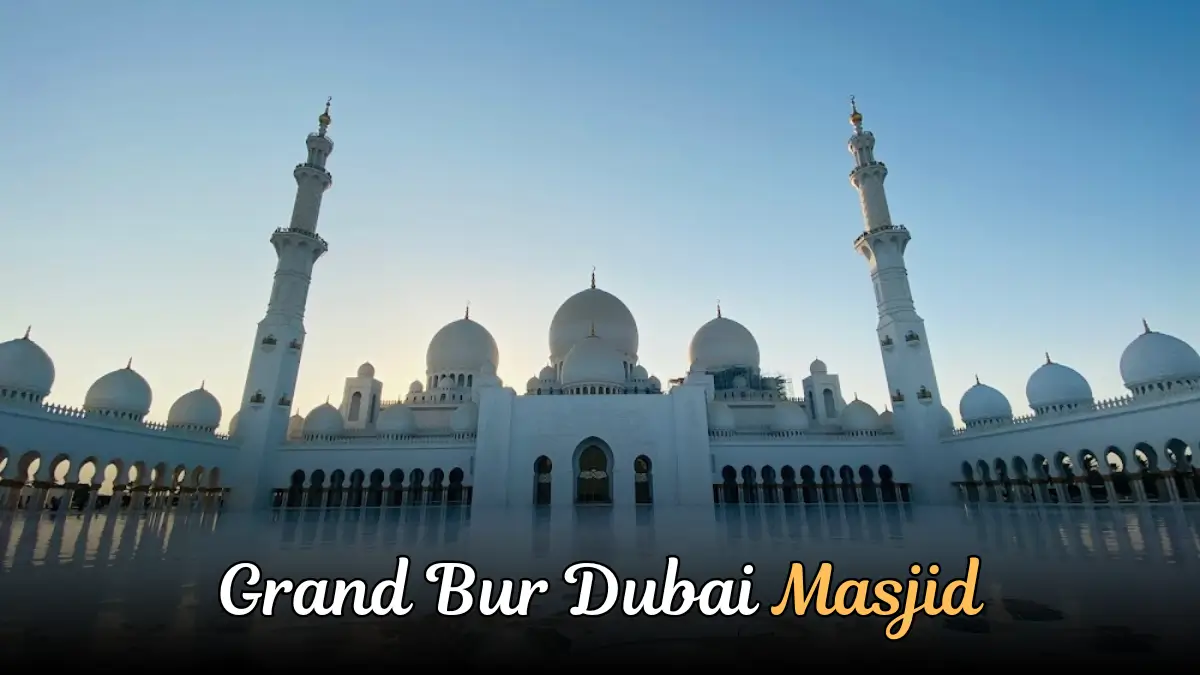
The Grand Bur Dubai Masjid is one of the most prominent and sacred sites of the city of Dubai that embodies the rich history and architecture of the Emirate as well as its profound cultural importance. The mosque is located in the core of the historic part of Bur Dubai so that it is not only a religious venue of the local Muslim population but also a symbol of the successful integration of the traditional and the modern in Dubai. This paper explores the history, architecture, cultural significance and contribution to the tourism sector that make the Grand Bur Dubai Masjid a tourist attraction site to both residents and visitors.
History and Origins
Grand Bur Dubai Masjid is one of the most popular religious buildings in Dubai. The structure was set up in the late 20th century. It was established as one of the objectives of the city of Dubai to protect Islamic history and offer a worshiping centre that contains the traditional and modern features of Islamic architecture.
The construction of the mosque started in 1990s and it was completed successfully in 1998. This was an era whereby Dubai was fast becoming a global city, but it wanted to retain its culture at the same time. The building of the mosque was under government funding and the kind charity of the local philanthropists who thought that it was necessary to have a place of worship and learning.
The Grand Bur Dubai Masjid was particularly designed to portray the traditional Islamic architecture unlike other contemporary mosques, which have blended with futuristic designs. It is based on the Arabian and Ottoman architectural works, and it creates a unique construction that perfectly aligns with the historic neighborhood of Bur Dubai, which is having a long-term connection with the cultural development of the city of Dubai.
Architectural Facilities and Characteristics
The Grand Bur Dubai Masjid is the artistic piece of Islamic architecture and the combination of the historical aspect and the modern engineering. The design of the mosque is distinct in a city of future skyscrapers, which provides the visitor an insight into the rich Islamic culture of the United Arab Emirates.
Key Design Features:
- Minaret: This is a slender and high minaret that is erected above the mosque which is typical of the Islamic buildings. It is not only a practical piece to call upon the faithful to prayer, but it is also a high-profile architectural feature. The detailing on the minarets is a result of the Middle East traditional architecture.
- Domes and Arches: The main central dome of the mosque is surrounded by smaller domes with very elaborate geometrical designs. The domes are associated with the heavens and they form a very important aspect of the design of mosques. The windows and doorways are arched to enhance the grandeur and the mosque is awe-inspiring and spiritually uplifting.
- Materials: The mosque was built using local materials such as traditional coral stone. This guarantees that the building is aesthetically beautiful as well as blends with the rest of the architecture of the historic Bur Dubai surroundings.
- Prayer Hall: The prayer hall of the mosque has the capacity of accommodating more than 1,000 worshippers which makes it one of the largest mosques in the region. The area is very wide and open, and gives the opportunity of tranquility and repose when praying. Indoor, there are elaborate Islamic calligraphy and paintings, such as the Quran verses, painted on the walls.
- Courtyard and Gardens: The mosque is also well equipped with a nice courtyard with greenery and water scenes which make it a tranquil place to meditate and unwind. The environment around the mosque makes it more spiritual.

Cultural Connotation and (Religious) Meaning
The Grand Bur Dubai Masjid serves as a cultural venue to the local Muslim community as well as a place of worship. It is important in spreading the Islamic values, providing educational opportunities and assembling community activities.
Religious Gatherings:
The mosque is a key place of holding prayers and Friday Jumu’ah prayer that has crowds of people every day. The mosque also focuses on Ramadan prayers, special nightly prayers (Taraweeh) are also held in the holy month. The level of vitality of the masjid is also enhanced during the prime Islamic holidays like the Eid when the community gathers to pray and party.
Islamic Education:
Besides being a prayer hall, the mosque also provides Islamic education. These programs meet the needs of the Muslims of every age, offer courses on Quranic studies, Islamic historical courses, and the teachings of the Prophet Muhammad. The mosque motivates the youth to identify themselves with their religion and know more about their religious background.
Community Outreach:
The mosque has been a proponent of community development programs. It also promotes social welfare and other programs, local charities and those that will help in social cohesion in Dubai. It is part of the overall objective of Dubai to be inclusive and achieve interfaith dialogue.
Role in Dubai’s Tourism
Although the Grand Bur Dubai Masjid is the main worshiping centre, it has equally become a key tourism destination in Dubai. The architectural beauty, cultural and historical significance of the mosque is a major tourist attraction to the city as it offers an experience to the travelers who want to enjoy the rich Islamic heritage of the city.
Attracting Tourists:
The mosque is situated in the historical Bur Dubai area, which provides an insight into the Dubai history. Tourists usually visit the local attractions, including the Dubai Museum and Al Fahidi Fort, where they can make a cultural trip combining both history and architecture and the local culture.
Non-Muslim visitors are also welcome in the mosque at specific times where they are allowed to have a glimpse of its beauty and they are also made aware of the practices of Islam. Guided tours can be conducted and this would give an in-depth account into the history, architecture and religious symbolism of the mosque. This educational outreach has turned the mosque into one of the important cultural tourism destinations.
Promoting Islamic Tourism:
Islamic tourism has recently been tremendously increasing, and a number of tourists prefer to view the cultural and religious background of the Muslim-dominated countries. Grand Bur Dubai Masjid is an ideal place to be in this trend, as it offers an educational and spiritual experience to those who want to know more about Islam and its Islamic culture.
Mosque and its Interrelation with the Bur Dubai Region
The Grand Bur Dubai Masjid is a part of the development of the traditional and cultural image of the Bur Dubai area. The mosque is located close to the Dubai Creek, adjacent with historical places, including the Dubai Museum, old fashioned markets like the Gold Souk and the Textile Souk.
Bur Dubai: An Old Fashioned Neighborhood
Bur Dubai is considered to be one of the oldest districts of this city and the mosque is a central place in this district. The mosque is the spiritual core of Bur Dubai, which offers a feeling of continuity in an otherwise developmentally hectic Dubai today. Its classic structure is in contrast to the modern high-rises in other areas of the city that reminds the inhabitants of the cultural background of the emirate.
Mantling with Surrounding Landmarks:
The place of the mosque is close to Dubai Creek and this contributes to its cultural significance. Dubai Creek, which has served as the main source in the history of the city, was the centre of the city where they could trade, fish and exchange cultures over centuries. The Grand Bur Dubai Masjid is among the additions to the identity of the area, as it is a symbol of the heritage of Dubai that benefits the local community.

The Grand Bur Dubai Masjid Today
The Grand Bur Dubai Masjid still remains vibrant in terms of its religious and cultural community. In spite of the fast modernization of Dubai, the mosque is still a reminder of the relative Islamic history and cultural diversity of the city.
Recent Renovations:
Over the past few years, the mosque has been subjected to various renovations to make sure that it is preserved and can host the increase in the number of worshippers and visitors. The modernizations have preserved the traditional beauty of the mosque and added a modern facility that would help visitors have a better experience.
Ongoing Projects:
In the future, the mosque is engaged in a number of community and educational projects, which will help to develop interfaith dialogue and promote Islamic values throughout the world. Such programs guarantee the sustainability of the mosque on the local population and world tourists.
Conclusion
The Grand Bur Dubai Masjid is one of the most important buildings in the city of Dubai both culturally and architecturally. The combination of conventional Islamic style, historical background, and being relevant to the present-day makes it the representation of the effort of the city to preserve its traditions and at the same time follow the future. As a local citizen, a tourist, or even a religious pilgrim, visiting the Grand Bur Dubai Masjid can be the only chance to get familiar with the Islamic history which was so rich in Dubai and experience the living example of the diverse and hospitable spirit of the city.
Frequently Asked Questions (FAQ)
When did the Grand Bur Dubai Masjid start?
The Grand Bur Dubai Masjid was done in 1998.
Is it permissible for non-Muslims to visit the Grand Bur Dubai Masjid?
Non-Muslims are invited to visit the mosque but usually on special hours, and the tours may be offered.
What is the capacity of the Grand Bur Dubai Masjid?
The mosque will be in a position to host a total of more than 1,000 worshippers in its main prayer hall.
Which design is the architectural style of the mosque?
The mosque is designed in the traditional Islamic architecture, domes, arches, and tall minaret.
What is the location of the Grand Bur Dubai Masjid?
It is situated in historic Bur Dubai in the vicinity of Dubai Creek.
Does it have a dress code requirement for visitors?
Yes, people are supposed to be fashionable when visiting the mosque.
What are the primary activities in the mosque?
The mosque has prayers every day, prayers during Ramadan and other religious and community activities.
Is there an educational program in the mosque?
Yes, there are community outreach programs and Islamic education at the mosque.
So what is the relevance of the mosque to the culture of Dubai?
The mosque symbolizes the efforts of Dubai to maintain its Islamic culture and community and cultural interchange.
What would be the way to the Grand Bur Dubai Masjid?
Tourists are permitted to explore the mosque by taking guided tours or visiting the mosque off prayer time.
Leave a Comment